


The Conversations Boards Aren’t Having
The greatest risk boards face isn’t disagreement around the board table. It’s the conversations that never happen. In today’s environment, long-term success depends more than ever on trust, psychological safety, and constructive challenge.
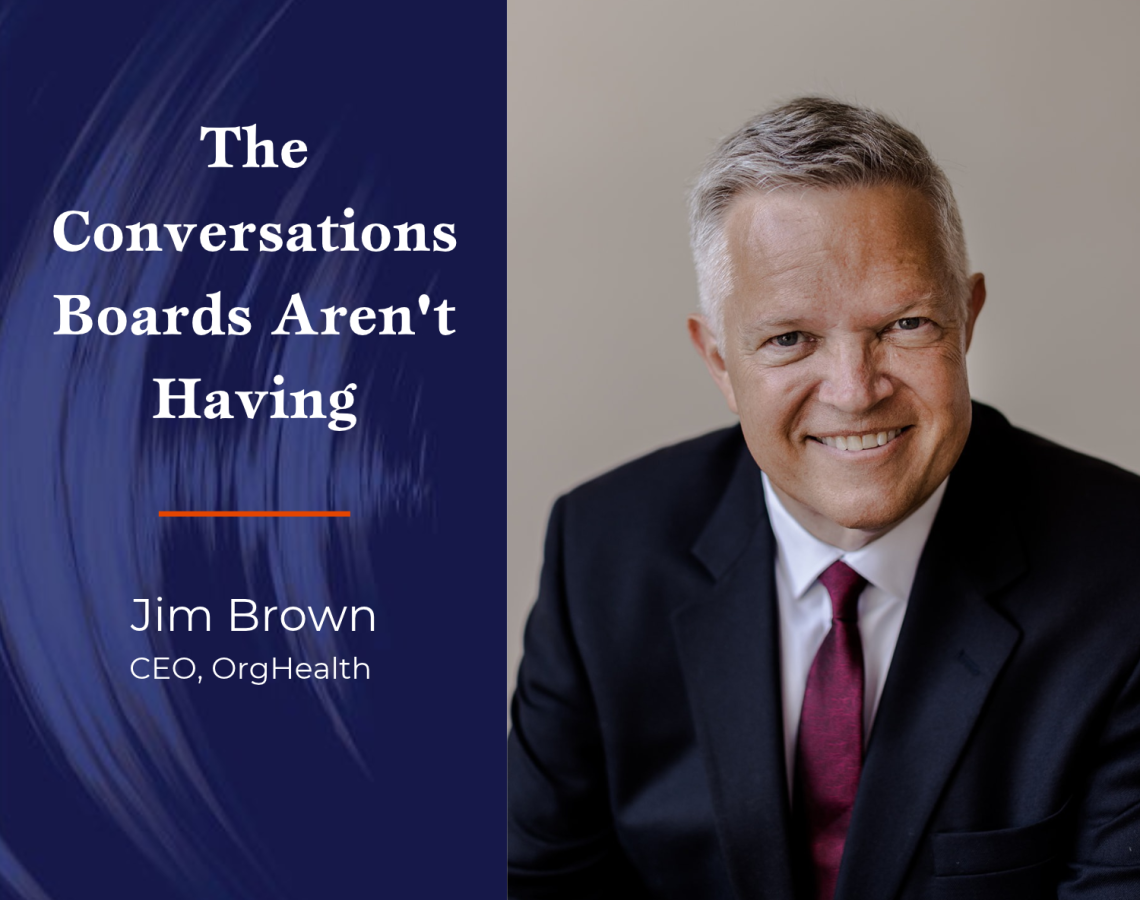
In this podcast, Dr Sabine Dembkowski, Founder and Managing Partner of Better Boards, is joined by Jim Brown. Jim is a USA TODAY bestselling author, governance expert, and founder of OrgHealth, with over 30 years of experience helping boards, CEOs, and executive teams strengthen governance and organisational health. As the author of the Amazon bestseller The Imperfect Board Member, 20th Anniversary Edition, and The Imperfect CEO, Jim challenges the assumption that effective governance is simply about structures, processes, and expertise. He explores what happens when artificial harmony replaces honest dialogue, and why trust, psychological safety, and constructive challenge are essential to better boardroom decisions.
“There’s something about the dynamics in the boardroom that is inhibiting what people feel safe to share.”
Jim notes that often, the most important conversations happen as sidebars in hallways, other offices, or in the parking lot after the official session. This happens for many reasons, including worry about looking uninformed or foolish or a fear of damaging relationships. In Jim’s experience, it is important that everyone in the room feels they can share their perspectives without fear of being marginalised or punished for saying what they think.
“Artificial harmony is where it feels like everybody’s getting along just fine, but it’s only the appearance of agreement.”
Jim notes that too often, boards have „efficient meetings“ where they cover the agenda, review topics, and tick compliance boxes. Unfortunately, important things go unsaid, and important questions go unasked. This creates an impression of harmony, but it’s not real. A better approach is to ask what’s missing from the discussion and encourage people to share different perspectives.
“Every Director shares responsibility, but Chairs have special responsibility.”
Jim believes Chairs have a special responsibility to shape the environment. They need to draw out quieter voices and manage dominant personalities. They also need to resist premature consensus and have the courage to slow things down, ask questions, and cut people off. They need to resist the pressure to be efficient and insist on being effective.
“The best way that leaders like Chairs and CEOs can help move the conversation to a better place is to model some vulnerability.”
Leaders feel pressure to look like they’ve got it all figured out. Yet, nobody’s perfect. Creating space for discussion at the board table starts by creating space for vulnerability. Leaders can model this by owning mistakes and being candid about when they operate outside their expertise.
“I would argue that some energetic disagreement that concludes with a full agreement is actually a better indicator of a high-performing board.”
Jim recognises consensus is used as a sign of a great board. He prefers to see energetic engagement and an ability to disagree among board members. This creates what he calls a beautiful dynamic, where the group listens to each other, challenges and validates viewpoints, and problem-solves together.
The top three takeaways from our conversation for effective boards are:
- Notice what is not being said. Silence isn’t usually agreement.
- Make disagreement safe. This happens when you have purposely built trust and psychological safety.
- Take responsibility for collective judgment. Governance isn’t an individual activity.
Come Join the Better Boards Community
We’d love to get to know you! If you’d like to become part of the Better Boards community, discover our unique approach, and explore ways to work with us or share your ideas on The Better Boards Podcast Series, drop us a line at info@better-boards.com
Remember to subscribe and never miss an episode of the Better Boards Podcast Series. It’s available on Apple, Spotify, or Google.
To find out how you can participate in the Better Boards Podcast Series or for more information on Better Boards’ solutions, please email us at info@better-boards.com.
